
Quant funds are a unique offering in the MF space as the investment decisions are driven by a blend of active and passive strategies.

Retail investors now own a larger share of smallcap companies than they did a year ago, thanks to their conviction in mutual fund (MF) schemes focused on this segment. Data from Capitaline shows that MFs' average holding in the National Stock Exchange Nifty Smallcap 250 Index stood at 9 per cent at the end of the October-December quarter of 2023-24 (FY24), up from 7.76 per cent in the same quarter of 2022-23.

Adani Group on Wednesday said it will invest over Rs 12,400 crore in an array of projects including a data centre, clean energy project, and a cement plant in Telangana. The group signed four memorandums of understanding (MoUs) for the investments at the World Economic Forum in Davos in presence of Telangana Chief Minister Revanth Reddy and Adani Group chairman Gautam Adani. The conglomerate's flagship firm Adani Enterprises will invest Rs 5,000 crore in setting up a 100 MW data centre that will use green energy while its renewable energy unit Adani Green Energy Ltd will spend an equivalent amount in setting up two pump storage projects.

Sustaining positive momentum for the 14th straight month, equity mutual funds attracted a net sum of Rs 15,890 crore in April amid heightened volatility in stock market and consistent selling by foreign portfolio investors. This was much lower compared to a record net inflow of Rs 28,463 crore seen in the preceding month, data from the Association of Mutual Funds in India (AMFI) showed on Tuesday. The lower quantum of net inflow from the previous month could be attributed to investors going slightly cautious given the ongoing challenges to the investment environment, Himanshu Srivastava, associate director - manager research, Morningstar India, said.

...'hum decide karenge kaun banega mukhyamantri. This decision is not to be taken in Mumbai.'

Sun Pharmaceutical Industries reported a 34 per cent year-on-year (Y-o-Y) jump in net profit to Rs 2,654.6 crore in Q4FY24.

'The transition from payment banks to SFBs is only permissible for banks not owned by corporate entities.'

Smallcap mutual funds recorded net outflows for the first time in 30 months in March as investors pulled out money after the markets regulator, the Securities and Exchange Board of India (Sebi), warned against "froth" in the mid and smallcap space. Active equity mutual fund (MF) schemes raked in Rs 22,600 crore in March. The March inflow is 16 per cent lower than the two-year high inflow of Rs 26,860 crore in February, shows data from the Association of MFs in India (Amfi).

Although the third quarter of financial year (2023-2024) FY24 (Q3FY24) was marginally below expectations, Info Edge (India) is witnessing strong investment trends and hitting new highs. The big driver is optimism about a pickup in the jobs market, which benefits Naukri.com and could mean upgrades in Q4FY24 expectations. The JobSpeak Index, which Naukri.com releases on a monthly basis, is showing a "transformative shift".

Nasdaq-listed Cognizant Technology Solutions has signed a definitive agreement to acquire global engineering company Belcan for about $1.3 billion (Rs 10,853.7 crore) in cash and stock. The transaction is expected to close in the September quarter. The total consideration includes $1.19 billion (Rs 9,935.31 crore) in cash and 1.47 million Cognizant shares, valued at $97 million (Rs 809.53 crore) based on the information technology services provider's closing share price on June 7, 2024.

Nikunj Saraf, Vice President Choice Wealth, answers your queries.

In a move to deepen manufacturing in electronics in India, the Centre is targeting 35-40 per cent value-addition through the yet-to-be launched production-linked incentive (PLI) scheme for electronics components, sources in the government

'We do not believe in fire sale. We don't do it.'

Small and midcap schemes may impose restrictions on redemptions, cap employee withdrawals, and increase the exit load, while ensuring a proportionate liquidation of the portfolio during market crises to safeguard the interests of all investors. These measures have been outlined in the investor protection policies recently put out by mutual fund (MF) trustees. The policies for small and midcap schemes were prepared by MF trustees following directives from the Securities and Exchange Board of India (Sebi) earlier this month.

Out of 3,871 recovery certificates issued by the regulator in various cases, 807 have been certified as difficult to recover.

In line with India's 'Neighbourhood First' policy, the largest share of aid portfolio has been granted to Bhutan with the allocation of Rs 2,068 crore.

In calendar year 2024, the stock price of Trent has zoomed 160% As compared to the 18% rally in the BSE Sensex during the same period. It has outperformed the market in the past 10 consecutive years.

Omkeshwar Singh, Head, Rank MF, a mutual fund investment platform, answers your queries.

'Indian investors have always been debt-heavy but with growing financial awareness they are getting comfortable with equities.'

Hindustan Unilever (HUL) will closely assess the global initiatives of its parent under the productivity programme and evaluate what works best for its business and people, said the company. The statement from HUL comes after its parent Unilever recently told its employees that it will cut a third of office-based jobs in Europe by the end of 2025. "We will closely assess the global initiatives of Unilever under the productivity programme and evaluate what works best for our business and our people," HUL told Business Standard.

India's second-largest telecom operator Bharti Airtel on Tuesday posted more than twofold year-on-year jump in its consolidated net profit for the March quarter to Rs 2,008 crore, buoyed by a lift in average revenue per user and an exceptional gain. The telco said its Q4 scorecard was backed by strong performance delivery across the portfolio and its CEO Gopal Vittal, in a statement, exuded optimism about opportunities in the coming years and Airtel being "well-poised" as a company. Airtel, which competes in the market with Reliance Jio and Vodafone Idea, as well as state-owned BSNL/MTNL, promised to maintain razor sharp focus on financial flexibility, optimising the capital structure and finance cost.

Omkeshwar Singh, head, Rank MF, a mutual fund investment platform, answers your queries.
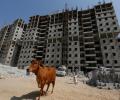
Tata Realty and Infrastructure, a subsidiary of Tata Sons, is looking to expand its business with over 50 projects across major cities in India, Sri Lanka, and the Maldives. The combined projects boast a development potential exceeding 51 million sq ft, according to a top executive. The Mumbai-based real estate major has completed the first phase of project developments in Male (the Maldives), and is gearing up for the second phase. It has also expanded its footprint in Sri Lanka and plans to add about 2 million sq ft. in Colombo.

Singh asserted that Deshmukh set a staggering collection target of Rs 100 crore for his officers, specifically from Mumbai, while also discussing plans to target key opposition figures, including former Chief Minister Devendra Fadnavis of the Bharatiya Janata Party.

When evaluating bonds, returns shouldn't be the sole factor. Pay close attention to the bond's credit rating. It should ideally be AA or higher.

Chief executive officers (CEOs) across sectors have expressed intentions to expand capacities, expecting the government's target to invest a record Rs 11.11 trillion on infrastructure development will act as a catalyst for a jump in consumer demand. "With the government planning a capex of Rs 11.11 trillion, private sector investment will come in a big way. Companies will be preparing for it right from today," H M Bangur, chairman of Shree Cement, told Business Standard. For the past few years, the investment scene in India has been dominated by government capital expenditures; private investments in the manufacturing sector have remained muted.

'We want to play the value game for our consumers, which is health and retail will grow faster for us than the group.'

Union Minister of Heavy Industries and Public Enterprises, H D Kumaraswamy on Saturday clarified that he was misquoted on his purported remarks regarding the United States semiconductor firm Micron.

rediffGURU Dev Ashish answers your personal finance and mutual fund queries.

FMCG major Hindustan Unilever on Wednesday reported a 1.53 per cent decline in consolidated net profit to Rs 2,561 crore for the fourth quarter ended March 31, 2024 due to factors such as deflation and softening of commodity prices. The company had posted a net profit of Rs 2,601 crore in the year-ago period, according to a regulatory filing from HUL. Net sales of Hindustan Unilever Ltd (HUL) were almost flat to Rs 15,013 crore in the March quarter.

Led by a new generation of entrepreneurs, India's family offices are shifting from traditional investments in physical and tangible assets like real estate to investing in technology, healthcare, and retail stocks. This new wave of family offices is engaging in stock market investments, including pre-IPO placements and secondary market operations. "Born into a world of technology, the next generation, especially those born after 2000, view technology as equally crucial as finance for running a business.

French energy giant TotalEnergies SE's $300 million investment in clean energy projects of Adani Green Energy Ltd has taken the total investments poured in by global investors in India's largest renewable power producer to $1.63 billion or about Rs 14,000 crore, sources close to the company said. Last week, Total announced it will hold a 50 per cent stake in the new joint venture firm where Adani Green Energy Ltd (AGEL) will hold the rest. The joint venture will hold a portfolio of 1,050 MW, including 300 MW of already operational capacity, 500 MW under construction and 250 MW under-development assets with a blend of solar and wind power.

rediffGURU Ramalingam Kalirajan answers your personal finance queries.

The combined market capitalisation of Adani Group companies fell by Rs 54,876 crore, to Rs 10.92 trillion, as investor sentiment turned bearish on Wednesday. Shares of Adani Transmission fell by 7.7 per cent to close at Rs 886 while those of Adani Power lost 7.1 per cent to end the day at Rs 323. The stock of Adani Enterprises, the flagship company of the group, lost 6.2 per cent to finish at Rs 2,530.
Hindustan Unilever Ltd on Friday reported a 1.08 per cent increase in consolidated net profit at Rs 2,508 crore in the third quarter ended December 2023. The company had posted a consolidated net profit of Rs 2,481 crore in the same quarter last fiscal, Hindustan Unilever Ltd (HUL) said in a regulatory filing. Its revenue from sales of products was marginally down to Rs 15,259 crore during the quarter.
IT services company HCLTech on Friday posted a 20.4 per cent rise in consolidated net profit to Rs 4,257 crore for the June-ended quarter and gave a revenue growth guidance of 3-5 per cent for FY25 on GenAI diversification and strong operational execution. For the fiscal's first quarter ended June 2024 (Q1 FY25), the revenue came in at Rs 28,057 crore, 6.6 per cent more than in the year-ago period. Seen sequentially, it was 1.6 per cent lower than the March quarter.

Indian family-run business houses have in recent years seen ugly public spats between owners over control. But metals-to-ports conglomerate Essar's Ruia family seems to be an exception. Three generations of the Ruia family - founder brother Shashi and Ravi Ruia, their children and grandchildren - continue to live under one roof and jointly run the business empire.

The employees are demanding salary parity with state government employees, seeking a pay scale adjustment to match that of their counterparts in the state sector.

In FY24, loans given out by such firms had topped a whopping Rs 146,517 crore, up by 49 per cent year-on-year and spread over 10.19 million accounts (up 35 per cent).

Mondelez, Coca-Cola, PepsiCo and Nestle India have been working on bringing down the sugar, salt, and sodium content.
